
"British social history"
200 article(s) found
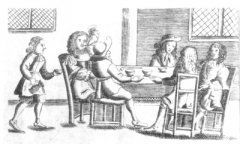
Coffee's Historical and Cultural Significance: Eastern Beverage, Western Culture
Coffee, a familiar but mysterious drink, blows into our world like a strong wind from the west and gradually changes our lives and temperaments.

History of Coffee Culture History of Constantinople Cafe
According to the 1635 records of the Turkish historian Patchev Ibrahim I, it was not until 1554, during the reign of Suleiman I, that the coffee shop first appeared, and the two Syrians each opened a coffee shop in Constantinople. It is located near the noisy market near the port and the Passa mosque. The museum is equipped with clean mats and blankets, and the charge is very cheap. The Turks are quick.

The Cultural History of Cafe the History of Constantinople Cafe
According to the 1635 records of the Turkish historian Patchev Ibrahim I, it was not until 1554, during the reign of Suleiman I, that the coffee shop first appeared, and the two Syrians each opened a coffee shop in Constantinople. It is located near the noisy market near the port and the Passa mosque. The museum is equipped with clean mats and blankets, and the charge is very cheap. The Turks are quick.

Coffee Culture History of British Literary Cafe
It is known all over the world that English people are addicted to tea. But from the mid-17th century to the early 18th century, the whole of London was soaked in coffee instead of tea. British men switch from drinking to drinking coffee, or both. When they get drunk in a pub, they go to the cafe to sober up with caffeine and then go to the pub to continue drinking. The first coffee shop in England, which appeared at Oxford University in 1650, was a
History of Constantinople Cafe
According to the Turkish historian Pechevi Ibrahim I in 1635, it was not until 1554, during the reign of Suleiman I, that coffee houses first appeared. Two Syria each opened a coffee house in Constantinople, near the noisy market near the port and Pasa Mosque. Clean mats and blankets are laid out and are cheap. The Turks are fast.
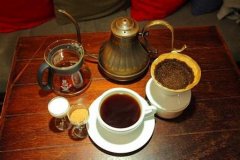
The Coffee Culture History of Constantinople Cafe
According to the 1635 records of the Turkish historian Patchev Ibrahim I, it was not until 1554, during the reign of Suleiman I, that the coffee shop first appeared, and the two Syrians each opened a coffee shop in Constantinople. It is located near the noisy market near the port and the Passa mosque. The museum is equipped with clean mats and blankets, and the charge is very cheap. The Turks are quick.

History of Cafe Development Constantinople
According to the 1635 records of the Turkish historian Patchev Ibrahim I, it was not until 1554, during the reign of Suleiman I, that the coffee shop first appeared, and the two Syrians each opened a coffee shop in Constantinople. It is located near the noisy market near the port and the Passa mosque. The museum is equipped with clean mats and blankets, and the charge is very cheap. The Turks are quick.
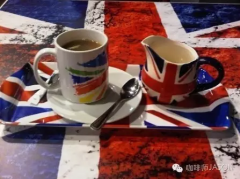
An introduction to the History of Coffee in Britain-the Development of Literary Cafe
Coffee is absolutely an integral part of British people's daily life. Whether rich or poor, from workers, students to high society, they can establish a close relationship with the cafes built along the street. For them, drinking coffee is an essential part of life. It is known all over the world that English people are addicted to tea. But from the mid-17th century to the early 18th century

Dangerous drinks: how Coffee creates a Culture of Resistance
Professional coffee knowledge exchange more information about coffee beans please follow the coffee workshop (Wechat official account cafe_style) Coffee as a "Drug" David. In his book five hundred years of Addiction, David T. Courtwright tries to define the English word "Drug" as a neutral concept: "addiction", that is, all addictive or addictive.
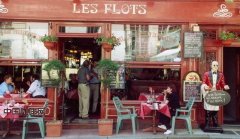
Coffee shop common sense the history of Constantinople coffee shop
According to the 1635 records of the Turkish historian Patchev Ibrahim I, it was not until 1554, during the reign of Suleiman I, that the coffee shop first appeared, and the two Syrians each opened a coffee shop in Constantinople. It is located near the noisy market near the port and the Passa mosque. The museum is equipped with clean mats and blankets, and the charge is very cheap. The Turks are quick.
Turkish coffee shops promote the British democratic revolution
The medieval theory of divine kingship began to crumble in England in the seventeenth century, and after the Glorious Revolution the basis of government had shifted from kings as God's agents on earth to the hands of people bound together by social contracts. After experiencing this great historical turning point, it can be said that the creed of modern democratic society, that is, the will of heaven, was formed. Ren Min Tong

Introduction to Atlanta Manor, Coffee Manor in Jamaica
In 1670, according to the Madrid Treaty, Spain formally ceded Jamaica and other places to Britain. The British immediately used the island of Jamaica as a base for their acts of piracy. Before the earthquake destroyed the port of Loire in 1692, it was once the capital of pirates in the Caribbean. Since then, the British built Kingston and gradually built it into the central city of Jamaica. Jamaica Bamboo Forest
History of Coffee Tree planting
In China, according to historical records, coffee trees were planted in Taiwan for the first time in 1884, and coffee cultivation in mainland China began in Yunnan. In 1902, a French missionary named Tian introduced seeds from Yingong, Binchuan County, Yunnan Province. it was successfully planted in a place called Zhu Kula, a tributary of the Jinsha River. The commercial cultivation of coffee in Yunnan began in 1985.

Flavor and taste of Jamaican boutique coffee beans introduction to the characteristic varieties of Blue Mountain Coffee in Manor area
Since the late 16th century, Jamaica has been repeatedly attacked by pirates from France, England, the Netherlands and other countries. In May 1655, a British fleet led by William Bing and Robert Venabus occupied Jamaica. They immediately invited pirates to the island's port of Loire to help defend the Spaniards from possible counterattacks. Between 1657 and 1658, the Spaniards

Historical Development of Coffee Culture-Historical Development of semi-automatic Coffee Machine
The Historical Development of Coffee Culture-the Historical Development of semi-automatic Coffee machines Europeans first came into contact with coffee around 1515-1519, but were not interested in it for a long time. In 1585, 30 years after the emergence of the cafe in Istanbul, the Vatican's envoy to the area, Morosinny, reported that these people were all humble, tacky and unenterprising.

A 17th century Caramel Macchiato-, a caramel macchiato with history.
Professional coffee knowledge exchange more coffee bean information please follow the coffee workshop (Wechat official account cafe_style) for many years Starbucks drank for nothing! It turns out that caramel macchiato should be drunk like this! A glass of Iced Green Tea Latte would like Grande to go. In the streets of Hong Kong, where there is a coffee shop, there are queues. Whether you are IFC Zhang Zhilin or a non-WTO college student

Jamaica Coffee with strong Flavor Atlanta Manor Coffee Flavor and Taste characteristics of Manor production area
In 1670, according to the Madrid Treaty, Spain formally ceded Jamaica and other places to Britain. The British immediately used the island of Jamaica as a base for their acts of piracy. Before the earthquake destroyed the port of Loire in 1692, it was once the capital of pirates in the Caribbean. Since then, the British built Kingston and gradually built it into the central city of Jamaica. Jamaica Bamboo Forest
In the coffee popular area, the British prefer to drink tea.
The British like to drink tea, but people living around Britain are keen on another kind of drink, coffee. Why did the British fall in love with that cup of tea surrounded by the coffee epidemic area?

In the coffee popular area, the British prefer to drink tea.
The British like to drink tea, but people living around Britain are keen on another kind of drink, coffee. The Nordic region, located in the north of England, is the most coffee-hungry region in the world. The five Nordic countries occupy the first, second, third, fourth and sixth places in the ranking of coffee consumption per capita, respectively, while Belgium, which ranks eighth, faces the United Kingdom across the sea. Why are the British?

Where coffee is popular, Britons prefer tea?
British people love tea, but people living around Britain are keen on another drink, coffee. Northern Europe, north of Britain, is the most coffee-crazed region in the world. The five Nordic countries occupy the first, second, third, fourth and sixth positions in the coffee consumption ranking table per capita, while Belgium, which ranks eighth, faces Britain across the sea. why the British